
Road safety products for distributors, contractors and government projects
WhatsApp: 008618662728327Language:
 English
Road safety products for distributors, contractors and government projects
WhatsApp: 008618662728327Language:
English
Choosing a traffic cone involves more than comparing price and height. Importers, distributors and contractors should match each model to the work area, local project requirements, climate and handling needs. The points below help buyers compare quotations and avoid ordering a cone that looks suitable in a photo but performs poorly on site.
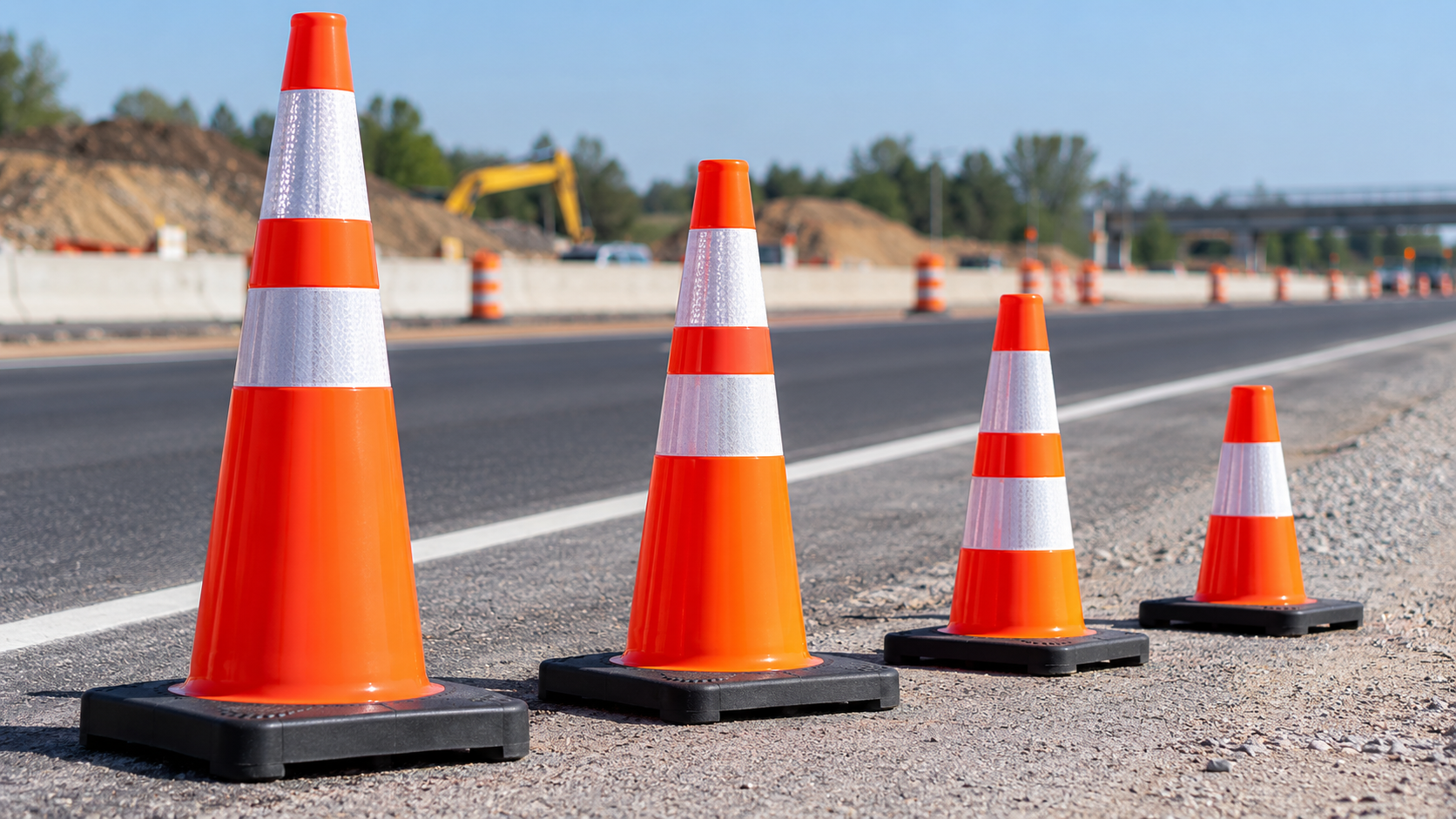
A cone for a warehouse or parking area may not suit a roadwork zone beside moving traffic. Confirm where the cones will be placed, how long they will be used, the required color and reflective treatment, and the specification set by the project owner or road authority. U.S. requirements can vary by agency and project. South American requirements differ by country and buyer. Ask for the actual project specification before claiming that a model is compliant.
PVC cones are often chosen when flexibility is important. PE cones may suit buyers who prioritize lower handling weight. Material alone does not determine quality. Compare body and base materials, total weight, height, base size and sample performance. Ask whether the approved sample and production order use the same formulation and dimensions.
Two cones of equal height can have very different stability. A wider or heavier base may help in wind and traffic turbulence, while a lighter cone can be faster to carry and stack. Consider the road surface, passing vehicles and expected duration of use. Request the total weight and base dimensions for every quoted model rather than comparing cone height alone.
For nighttime work, confirm the reflective collar or film specification, placement and condition. A bright product photo cannot verify visibility or compliance. In sunny or hot locations, ask about UV exposure and color stability. For cold locations, request relevant test information. Match these details to the destination and the project's documented requirements.
Cone height, total weight and base dimensions; body and base materials; reflective collar or film options; color and logo options; carton dimensions and stacking method; order quantity and destination; any project-specific documentation required by the buyer. Ask the supplier to identify which details are standard and which require customization. This makes quotations easier to compare and reduces surprises after production.
For U.S. projects, send the applicable agency or contract specification. For South American orders, identify the destination country, climate and intended use. In both markets, review the exact model and supporting documents before making a compliance claim. Explore Etonda's traffic cone range, compare reflective PVC traffic cones, and send your requirements for a model discussion.
For a quotation, tell us the cone height, intended use, destination country and order quantity.
Compare the available configurations: rubber-base PVC traffic cones and PE traffic cones. Request model-specific dimensions, base weight and reflective options before placing a bulk order.
No. Ask the road authority or project owner for the applicable contract requirements, including cone height, color and reflective treatment. Check the proposed model and its supporting documents against those requirements before describing it as compliant.
Request the total weight, base dimensions, body and base materials, reflective collar specification and a production sample for each model. Height alone does not show stability or durability.
Send the destination country, intended use, required height, quantity, reflective treatment, target delivery date and any project specification. Ask for model-specific dimensions, packing details and available test documents in the quotation.



CONTACT US
 Sales manager:Faye
 TEL: 008613182944931
 WhatsApp: 008618662728327
 EMAIL: info@etonda-trafficsafety.com
newsletter
follow us


